Law report No. GLW-6470 · filed October 15, 2026
Regulation & EnforcementReported case
Bank of America Fined $1.2 Billion Over Suspicious Activity Failures
The US government has fined Bank of America $1.2 billion for failing to police suspicious activity, Reuters reports — one of the largest penalties of its kind.
By Marcus Bennett3 min read649 words
Holding
- The US government fined Bank of America $1.2 billion, Reuters reports.
- The penalty concerns the bank's failure to police suspicious activity.
- Bank of America is among the largest banks in the United States.
- The fine ranks among the largest US penalties for suspicious-activity monitoring failures.
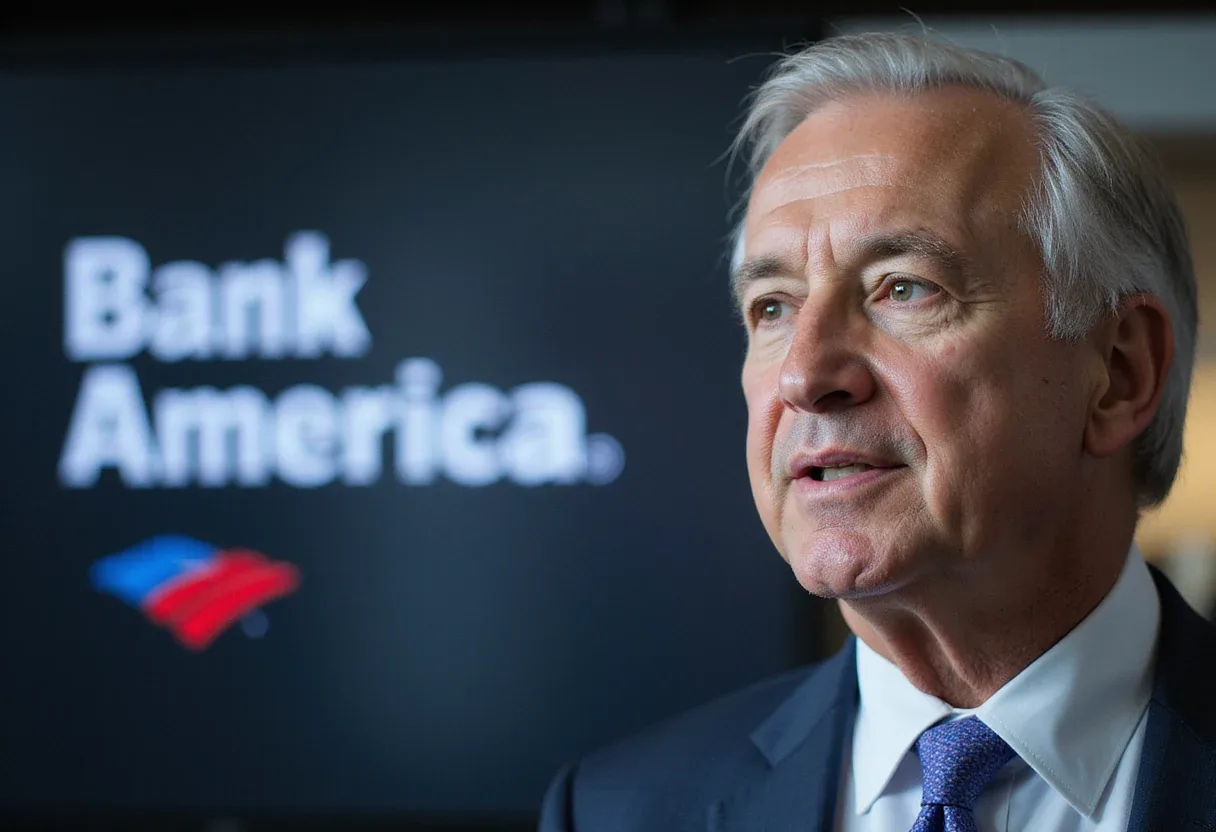
The US government has fined Bank of America $1.2 billion for failing to police suspicious activity, Reuters reports. The penalty lands on one of the country's largest banks. It concerns the bank's controls against suspicious financial activity.
The figure is the hardest fact in this story. A $1.2 billion sanction is not a routine compliance write-off. It ranks among the significant enforcement actions against a major US financial institution for failures in this field. The finding at its core is simple. Regulators concluded the bank did not adequately police suspicious activity moving through its systems.
What does the penalty target?
The fine addresses failures in monitoring suspicious activity. That duty sits at the heart of US anti-money-laundering law. Banks must watch customer transactions. They must flag conduct that raises red flags. They must report it to the authorities. The government's position, as reflected in the Reuters report, is that Bank of America fell short of that obligation.
The headline finding can be stated in three lines:
- The penalty amounts to $1.2 billion.
- The US government imposed it.
- The conduct at issue is a failure to police suspicious activity.
Who decided, and for whom?
The Reuters report attributes the action to the US government. The deciding body is a US enforcement authority acting against the bank. The date of the announcement appears in the report of December 2024 vintage per the wire's publication. Practitioners will want the underlying order. It will name the specific agency, the statutory basis, and any settlement terms.
This matters for citation purposes. A $1.2 billion resolution of this type typically arrives as a negotiated settlement. That means a consent order or deferred resolution with an agreed statement of facts. The operative language of such documents governs what the bank admitted and what it denied.
What does the ruling change for practitioners?
For compliance officers, the message is direct. Suspicious-activity monitoring is a live enforcement priority, and the price of failure now runs to ten figures. A $1.2 billion penalty recalibrates the risk calculus for any institution weighing investment in transaction-surveillance systems against the cost of a government finding. Outside counsel should expect boards to ask hard questions about monitoring budgets in the coming quarter, and they should expect examiners to probe the same controls in the next supervisory cycle. The practical consequence is straightforward: transaction-monitoring programs that were defensible last year may not survive scrutiny this year.
How large is the penalty in context?
The number deserves emphasis. $1.2 billion places this action in the top tier of financial-institution penalties in the United States. It exceeds many landmark anti-money-laundering resolutions of the past decade. It signals that regulators treat surveillance failures by systemically large banks as first-order violations rather than technical lapses.
Bank of America is among the largest banks in the United States by assets. Its customer base spans tens of millions of accounts. That scale cuts both ways. It multiplies the volume of transactions the bank must screen. It also multiplies the exposure when screening fails, as the size of this fine demonstrates.
What happens next?
The Reuters report gives the headline and the sum. The underlying enforcement documents will fill in the rest. Practitioners should watch for several elements:
- The named agency or agencies behind the action.
- The statute invoked as the basis of the penalty.
- Any undertakings or remedial obligations attached to the resolution.
- Whether the settlement includes admissions of fact.
Each element shapes how courts and regulators treat this action later. Each shapes how other banks defend their own programs.
The core holding stands on its own. The US government fined Bank of America $1.2 billion for failing to police suspicious activity. Every compliance department in the country will read that sentence twice.
By Marcus Bennett, Global Law Wire
via GN Enforcement (Source)
More from Marcus Bennett
Show full bio
Market editor covering regulation, policy and their impact on International law and legal practice at Global Law Wire.
251 articles
Also before the court
- Bank of America Hit With $1.21 Billion Penalty Over AML Deficiencies
- US Fines Bank of America $1.2 Billion Over AML and Sanctions Failures
- Bank of America Hit With $1.2bn Fine Over Money-Laundering Failures
- Bank of America Faces $1.2 Billion Penalty Over AML Failures
- Bank of America Faces $1.2 Billion Fine Over AML Failures