Law report No. GLW-5772 · filed October 14, 2026
Courts & TribunalsReported case
UN World Court Declares Israel's Occupation of Palestinian Territory Unlawful
The International Court of Justice has declared Israel's continued occupation of Palestinian territory unlawful. The advisory opinion states the legal position; it does not itself compel withdrawal.
By Priya Raman4 min read730 words
Holding
- The International Court of Justice, the United Nations' principal judicial organ, declared Israel's continued occupation of Palestinian territory unlawful.
- The holding was issued in The Hague by the UN world court, as reported by UN News.
- The court's pronouncement is an advisory opinion, which states the law but carries no binding enforcement mechanism of its own.
- The practical effect depends on follow-up action by UN political organs and member states, which the court cannot direct.
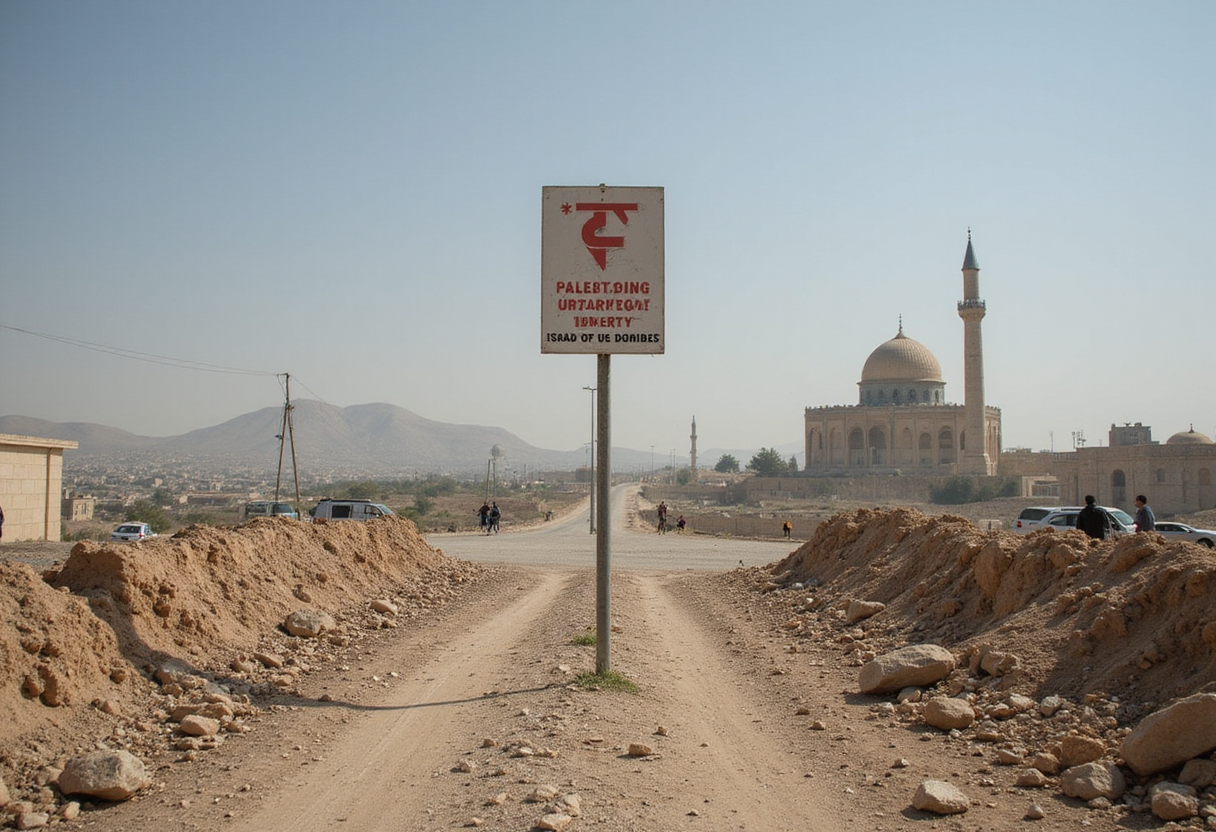
The International Court of Justice has ruled that Israel's continued occupation of Palestinian territory is unlawful. The UN world court, sitting in The Hague, delivered the holding in a formal pronouncement reported by UN News. That single word — unlawful — now attaches, as a matter of the court's stated view, to one of the longest-running territorial disputes before the international system.
The deciding body matters here. The International Court of Justice is the principal judicial organ of the United Nations. It adjudicates disputes between states and, when asked, issues advisory opinions on legal questions referred to it by UN organs. This holding belongs to the second category. The distinction is not cosmetic.
What does the ruling actually decide?
The court stated that the continuation of the occupation is unlawful. That is the operative finding, and practitioners should read it precisely: the court characterized the occupation's continuation — its persistence in time — as contrary to international law. The dispatch conveying the decision does not reproduce the full reasoning, the paragraph numbers, or the voting record of the bench. Those omissions matter. Advisory opinions can carry dissents, separate opinions, and carefully qualified scope. Without the text, any claim about the breadth of the holding rests on inference.
What the headline does establish is the core legal characterization. Unlawful. The court did not soften the term.
Is an advisory opinion binding?
No. And the court's own doctrine says so.
An advisory opinion states the view of the court on a question of law. It does not operate as a judgment in a contentious case between two states, which under Article 59 of the court's Statute binds only the parties. An advisory opinion binds nobody in the enforcement sense. It carries, in the words long associated with the court's practice, persuasive authority of the highest order.
The practical consequence follows from that structure:
- UN political organs, including the General Assembly and the Security Council, may rely on the opinion to frame resolutions, deadlines, or sanctions debates.
- Individual states may invoke it to justify measures concerning recognition, trade, or arms transfers, subject to their own domestic law.
- National courts and regulators may treat the opinion as authoritative evidence of the state of international law.
- No enforcement mechanism activates automatically upon delivery.
Takeaway in plain words: the court has spoken on the law; the politics of enforcement now move to bodies the court does not control.
What does the ruling change for practitioners?
For legal advisers, the opinion becomes a reference point in any instrument touching the occupied territories — treaty clauses, due-diligence frameworks, corporate human-rights policies, and litigation over jurisdiction or state responsibility. Counsel advising multinationals with operations in or connected to the territories should expect the opinion to surface in complaints before national courts and OECD national contact points.
For governments, the opinion supplies legal cover for positions they may already hold, and a talking point for those that do not. Skepticism is warranted on both sides. An opinion that binds no one can still be quoted by everyone.
Three cautions temper any strong reading:
- The dispatch available does not state the scope of territory the court addressed, so precision on that point awaits the full text.
- It does not report the vote tally or separate opinions of the judges.
- It does not set any deadline, remedy, or obligation of withdrawal in the quoted material.
Each gap will be filled — or exploited — in the coming argument.
What was not said?
The word unlawful answers one question and leaves others standing. The headline does not address consequences: sanctions, reparations, obligations of third states, or timelines. It does not, on the reported language alone, prescribe what Israel or any other actor must now do. Readers should resist inferring remedies the court has not, on this record, announced.
Takeaway in plain words: the court declared the occupation unlawful; it did not, in the words reported, dictate the next step.
The road after The Hague
Advisory opinions historically shift legal baselines even when they shift nothing immediately. Organs of the United Nations will now decide whether to translate this holding into action, and states will decide whether to follow. The court has done what a court can do. It has stated the law as it sees it.
Whether the world obeys is a different docket entirely.
By Priya Raman, Global Law Wire
via GN International Courts (Source)
More from Priya Raman
Show full bio
Staff writer covering companies, deals and strategy in International law and legal practice at Global Law Wire.
215 articles
Also before the court
- ICJ Advisory Opinion on Gaza Spurs Debate Over Disloyalty to UN Charter
- ICJ Rules in Israel Genocide Case: What the Decision Delivers
- Israeli Government Signals It May Defy Top Court Ruling
- ICJ Opinion on Israel's Presence in Occupied Territory Hailed as Historic
- ICC Issues Arrest Warrants for Netanyahu and Others Over Israel-Hamas War